

Individual pricing expertise alone is insufficient. This article shows why cross-functional discipline and a virtual pricing team yield better results for mid-market manufacturers and distributors.
A $140M industrial distributor hired a senior pricing manager who quickly identified $2.8M in annual margin leakage. However, her recommendations were not adopted by sales leadership, and after a year, the position was eliminated as it was seen as overhead that slowed deals.
This is common for mid-market manufacturers and distributors. Hiring a pricing professional seems logical when margins decline and discounts rise.
But hiring expertise alone does not solve the problem.
McKinsey’s study of over 1,000 pricing transformations found that companies that make pricing an organizational capability achieve 2 to 7 percentage points of margin improvement, with early gains within 3 to 6 months. The difference between success and failure lies less in recruitment and more in building strong support systems.
To bridge these gaps, we need to examine why relying solely on a pricing expert often fails to boost margins for mid-market companies. This article will argue that true improvement comes from building cross-functional pricing capabilities and adopting a staged maturity approach. Taken together, these steps help organizations raise margins without requiring a full pricing team and guide readers toward practical, scalable solutions.
Why “Pricing Professionals” Alone Don’t Fix Pricing Performance
Expertise Without an Operating System
A skilled pricing analyst may quickly identify significant margin leakage using segmentation models and competitive benchmarking. However, after six months, there may be little measurable change.
The problem is not a lack of competence; it’s about building capability rather than a one-time project. Capabilities enable organizations to operate reliably, consistently, and at scale, requiring process, governance, tools, and cross-functional commitment. One expert alone cannot establish this.
A pricing professional adds expertise, but without strong processes, governance, and workflows, this expertise will not yield results. Effective execution depends on having an operating system with guardrails, decision rights, and approval workflows.
What Mid-Market Teams Are Actually Missing
Research from the Professional Pricing Society shows that 82% of companies with mature pricing capabilities establish cross-functional pricing governance, compared to only 23% of organizations with low pricing maturity. The key difference is whether leadership builds infrastructure around personnel to ensure the implementation of decisions.
Mid-market manufacturers and distributors commonly lack essential governance, including defined decision rights for price changes, standardized quoting and renewal processes, and mechanisms to drive behavior change in the field.
Research from Revology Analytics shows that companies achieve better results when pricing teams collaborate with marketing, sales, and finance, focusing on customer understanding rather than isolated analysis.
What a Pricing Professional Typically Owns, and What Falls Through the Cracks
Core Responsibilities
In the U.S., pricing managers and directors typically earn salaries between $100,000 and $200,000, depending on location, experience, and industry.
Core responsibilities include price setting, list price maintenance, deal support, margin analysis, segmentation modeling, and competitive monitoring. While all are valuable, none alone resolves pricing performance issues.
The Gaps That Persist
A pricing professional can identify margin losses and model-improvement impacts, but without organizational infrastructure, they cannot influence how sales teams apply pricing in practice.
Pricing teams define price floors and corridors, but organizations often fail to systematically enforce these in quoting tools or approval workflows.
- Sales representatives often lack clarity on when they need approval, whom to approach, or what response times to expect, so they default to discounts to close deals quickly.
- Field adoption: New pricing guidance often lacks the training, coaching, or incentive alignment needed to drive behavior change.
- Organizations may struggle to determine whether pricing strategies are reflected in invoiced prices or are masked by concessions and untracked discounts.
The Organ Rejection Problem: Why Pricing Can’t Live in a Silo
Governance and Control Come First
Building pricing capability begins with three essential questions: who can change a price, under what conditions, and what occurs when someone operates outside established guidelines.
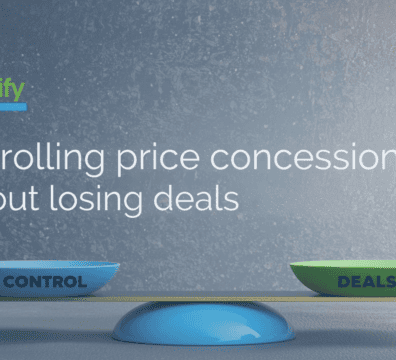
Organizations cannot rely on any pricing model if sales representatives can override price floors by calling a sympathetic VP. Governance requires leaders to define decision rights, guardrails, and escalation paths, commit to these standards, and measure compliance.
Discipline as Operating Practice
While discipline may seem restrictive, it reduces ad-hoc decisions and fosters accountability. Teams conduct weekly deal reviews to provide structure, identify issues, and enable timely intervention. Well-defined deal desk workflows speed up exception pricing decisions and increase finance visibility. Accountability measures require managers to ensure discount reasons are documented, override rates are tracked, and coaching aligns with established guardrails.
Cross-Functional Integration, or Nothing Changes
This stage is where most pricing transformations stall and where pricing professionals often face organizational resistance.
A similar pattern emerges in organizations: companies hire talented pricing professionals whose data-driven analyses withstand scrutiny. Yet, entrenched behaviors, territorial sales leaders, and executives who prefer traditional methods often resist these changes.
A similar pattern occurs in organizations: a talented pricing professional is hired, their analysis is sound, and recommendations are data-driven. However, entrenched behaviors, territorial sales leaders, and executives used to traditional methods often resist these changes.
The symptoms are predictable.
Sales leaders bypass pricing guidance, go to VPs for exceptions, exclude pricing from meetings, stall data requests, and IT changes priorities. The analytical infrastructure fails to launch, and, after frustration, the pricing professional leaves or is dismissed. Leadership concludes, “Pricing doesn’t work here.”
In these cases, the organization rejects the change, not the individual. Research on organizational change shows that external talent often encounters this pattern, as organizations may see new functions as threats rather than resources.
The solution is cross-functional integration from the outset. BCG’s research on pricing governance states that no single functional area has all the information needed for pricing decisions. Simple handoffs between departments result in missed opportunities. Pricing must be integrated into the operating rhythm of sales, finance, product, and operations. Data from the Professional Pricing Society shows that companies with strong cross-functional alignment on pricing achieve 25% higher returns from their pricing initiatives compared to those managed by a single department.
About half of sales representatives resist pricing initiatives, as roughly 50% of their compensation is commission-based, and any perceived threat to deal velocity prompts defensive behavior. Effective pricing capability addresses this by designing workflows that accelerate deal cycles and aligning incentives so improved pricing and sales performance reinforce each other.
The Virtual Pricing Team Model: Capability Plus Execution
How It Works Day-to-Day
For a $75M manufacturer with 30 sales representatives and 8,000 active SKUs, hiring a full pricing team—director, two analysts, and a deal desk coordinator—costs $400,000 to $600,000 annually, not including tools, training, or the 12 to 18 months needed for full effectiveness. This approach also risks organizational resistance.
A virtual pricing team provides equivalent functional coverage at a lower cost. Fractional pricing leadership models typically cost $5,000 to $15,000 per month, representing a 40 to 65% reduction compared to an internal team. Additionally, the virtual model reduces resistance by integrating into existing workflows rather than establishing a separate power center.
The drawback of a virtual pricing team is detachment, as relying on external, part-time resources for daily activities can be challenging. Revify Analytics addresses this by providing experts, processes, and metrics to enable organizational self-reliance, with clear stages and transparent pricing.
Where It Plugs In
A well-designed virtual pricing team operates across four integration points. In sales, it provides deal-level pricing guidance, reviews exceptions, and supports negotiations with data. In finance, it connects pricing decisions to margin outcomes and builds analytical models to support guardrails. In product and operations, it aligns pricing with cost structures, product lifecycle, and capacity constraints. In leadership, it manages the governance cadence, including weekly deal reviews, monthly margin performance, and quarterly pricing strategy updates.
This cross-functional integration helps prevent organizational resistance. The virtual pricing team acts as a shared resource, supporting existing functions. Sales receives faster deal support, finance gains improved margin visibility, and leadership benefits from a pricing operating system that enhances accountability without adding a new department.
What You Keep In-House vs. What Revify Runs
The division of responsibilities is practical: your organization retains final pricing authority, customer relationships, strategic direction, and institutional knowledge. Revify manages analytics, guardrail design, deal desk operations, governance facilitation, exception review, and the operating cadence.
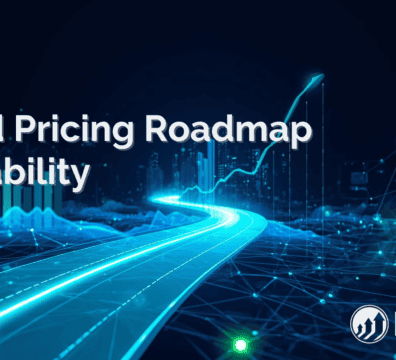
The RGM Maturity Journey: From Diagnosis to Durable Control
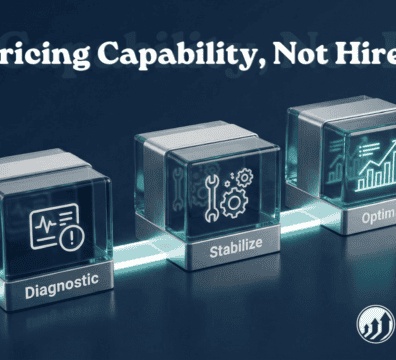
Profit Diagnostic: Find the Leaks and Prioritize
Each engagement begins with evidence. The Profit Diagnostic reviews transaction data, pricing policies, workflow gaps, and governance structure to create a prioritized map of margin leakage. This delivers a detailed analysis of where and why money leaves the business.
Typical findings include discount variances by representative, customer, and product family, indicating inconsistent application of pricing guidance; implicit price concessions such as freight absorption, payment-term giveaways, and rebate overruns not reflected in standard discount reporting; and policy gaps where guardrails are missing or unenforced.
Margin Stabilizer: Install Guardrails and Discount Control
The Margin Stabilizer phase addresses the leakage identified in the Diagnostic. Pricing discipline is established as ongoing operating practices, including price floors and corridors by customer tier, product category, and deal type; exception approval workflows with defined service levels; discount reason documentation; and a weekly deal review cadence with defined participants, agendas, and accountability measures.
Growth Commander: Optimize and Sustain
Once guardrails are established and the operating rhythm is in place, the focus shifts to performance improvement. Growth Commander introduces price elasticity modeling, customer-level value scoring, and mix optimization, all of which rely on the stable data foundation built in earlier phases.
What the First 30 to 90 Days Look Like
Immediate Actions That Generate Cash
McKinsey’s data shows initial margin benefits appearing within three to six months. In our experience with mid-market manufacturers, targeted interventions produce measurable results even faster.
Weeks 1 to 2: Diagnostic and prioritization. Ingest 12 to 24 months of transaction data. Map current pricing workflows, approval paths, and policy documents. Identify the top three to five leakage sources by dollar impact.
Weeks 3 to 6: First guardrails. Implement price floors for the highest-leakage segments. Launch exception approval workflows for the largest deal types. Establish a weekly deal review cadence with sales and finance leadership.
Weeks 6 to 12: Expand and reinforce. Roll guardrails to additional product families and customer tiers. Tighten terms management (freight, rebates, surcharges). Begin tracking adoption metrics alongside margin metrics.
How Pricing Discipline Sticks
Pricing transformations fail more often due to change resistance than analytical shortcomings. Preventing organ rejection requires delivering visible wins within weeks, as early results create internal advocates who support the initiative when resistance arises. This approach embeds pricing into existing meetings and workflows rather than creating parallel structures that feel burdensome. It also trains managers to coach representatives toward guardrails instead of punishing violations, shifting the narrative from “pricing is restricting us” to “pricing is helping us sell smarter.”
KPIs That Prove Pricing Capability Is Working
Price Realization and Discount Leakage
Price realization, the percentage of list price actually captured in invoiced revenue, is the most revealing metric. It captures the combined effect of discounts, exceptions, concessions, and term erosion. Track it by rep, customer segment, product family, and channel to identify where the organization is improving and where old habits persist.
Margin Improvement and Mix
Margin improvement is the outcome. Mix analysis explains how it was achieved. A 150-basis-point margin improvement from across-the-board price increases differs from the same improvement driven by a shift in mix toward higher-value products and customers. The latter is more sustainable. Know which one you are achieving.
Adoption Metrics
Leading indicators are as important as lagging ones. Guardrail compliance rate: What percentage of quotes fall within defined price corridors? Exception rate and override rate: Are exceptions declining over time, and are overrides documented with reasons? Approval cycle time: How quickly are exception requests resolved? Slow cycles may incentivize representatives to avoid the process. Deal review attendance and follow-through: Is the governance cadence maintained, or has it lapsed?
FAQ: Pricing Professionals, Certifications, and Career Questions
What Is a Pricing Professional?
Someone who specializes in setting, managing, and optimizing prices across a company’s product or service portfolio. Responsibilities typically include competitive analysis, margin analysis, segmentation, deal support, and pricing strategy development. In manufacturing and distribution, pricing professionals often sit within finance, commercial operations, or a dedicated pricing function.
Is the Certified Pricing Professional (CPP) Worth It?
The CPP, administered by the Professional Pricing Society, is the only globally recognized pricing certification. It requires a minimum of five years of pricing-related experience and costs approximately $800 to $1,200, including exam and study materials. CPP holders report salary premiums of 10-15% and improved access to senior roles. For individuals building a career in pricing, it signals seriousness. For organizations evaluating candidates, it’s a useful baseline, though operational experience in your specific industry matters more than the credential itself.
What Is a Certified Pricing Manager (CPM)?
A more entry-level certification from the Professional Pricing Society, targeting professionals with fewer than five years of pricing experience. It covers pricing fundamentals, including cost analysis, competitive pricing, and value-based pricing concepts. A stepping stone toward the CPP for people earlier in their pricing careers.
What Are the 7 C’s of Pricing?
A framework for structuring pricing decisions: Cost (production and delivery economics), Customer (value perception and willingness to pay), Competition (alternative pricing), Channel (distribution effects), Compliance (regulatory and contractual constraints), Capacity (supply-side influence on pricing), and Communication (how price is presented and justified). The framework is useful as a checklist, less useful as a strategy. Real pricing discipline comes from the operating system you build around decisions, not from a mnemonic.
How Much Do Pricing Specialists Make in the US?
Compensation varies by role and location. Entry-level pricing analysts start around $66,000 to $70,000. Pricing managers average $101,000 to $145,000. Senior pricing managers reach approximately $155,000, and pricing directors average $158,000+. Strategic pricing managers in high-cost markets like San Jose and New York can exceed $200,000. These figures reflect base salary; total compensation with bonuses typically adds 15-25%.
Getting Started: Start Your Profit Diagnostic with Revify Analytics
What You’ll Provide
Three things: 12 to 24 months of transaction-level data (invoices, credit memos, pricing exceptions), access to the people who make pricing decisions today (sales leaders, finance, product), and a willingness to look at the results honestly. The process takes 2 to 4 weeks, depending on data availability and organizational complexity.
What You’ll Get
A prioritized leakage map showing exactly where margin is leaving the business and why. A set of recommended guardrails and governance changes ranked by impact and implementation speed. And a financial model showing the expected margin improvement from each phase of the maturity journey. An action plan, not a strategy deck.
How Each Phase Funds the Next
This is the economic logic that makes the staged approach work for mid-market companies. The Profit Diagnostic identifies quick wins. The Margin Stabilizer captures them. The margin improvement from those early actions funds the investment in Growth Commander and Managed Services. Each phase pays for the next through the gains it produces.
Consider this: if your company hired a pricing professional and the initiative failed, was the issue the individual, or was it the lack of the operating system required for success?
Most mid-market companies do not need more pricing talent. They need pricing capability. The difference is significant.
Start your Profit Diagnostic to identify exactly where margin is leaving your business and what to address first.